
metropolitan city living
confluences of familiar strangers

(one of my occasional pieces on urban living; previous pieces listed below)
There is a character to metropolitan city living, a quality separating the city psychologically from the countryside, and from the smaller towns and cities around it. It is difficult to put your finger on it exactly, but it is there: it’s at least partly the presence of buildings without end, a city stretched out to the horizon, the place that people outside look to as the place of escape. The familiar strangers on the train platform; the crowds of tourists jostling about, the places that remain constant although the people change constantly.
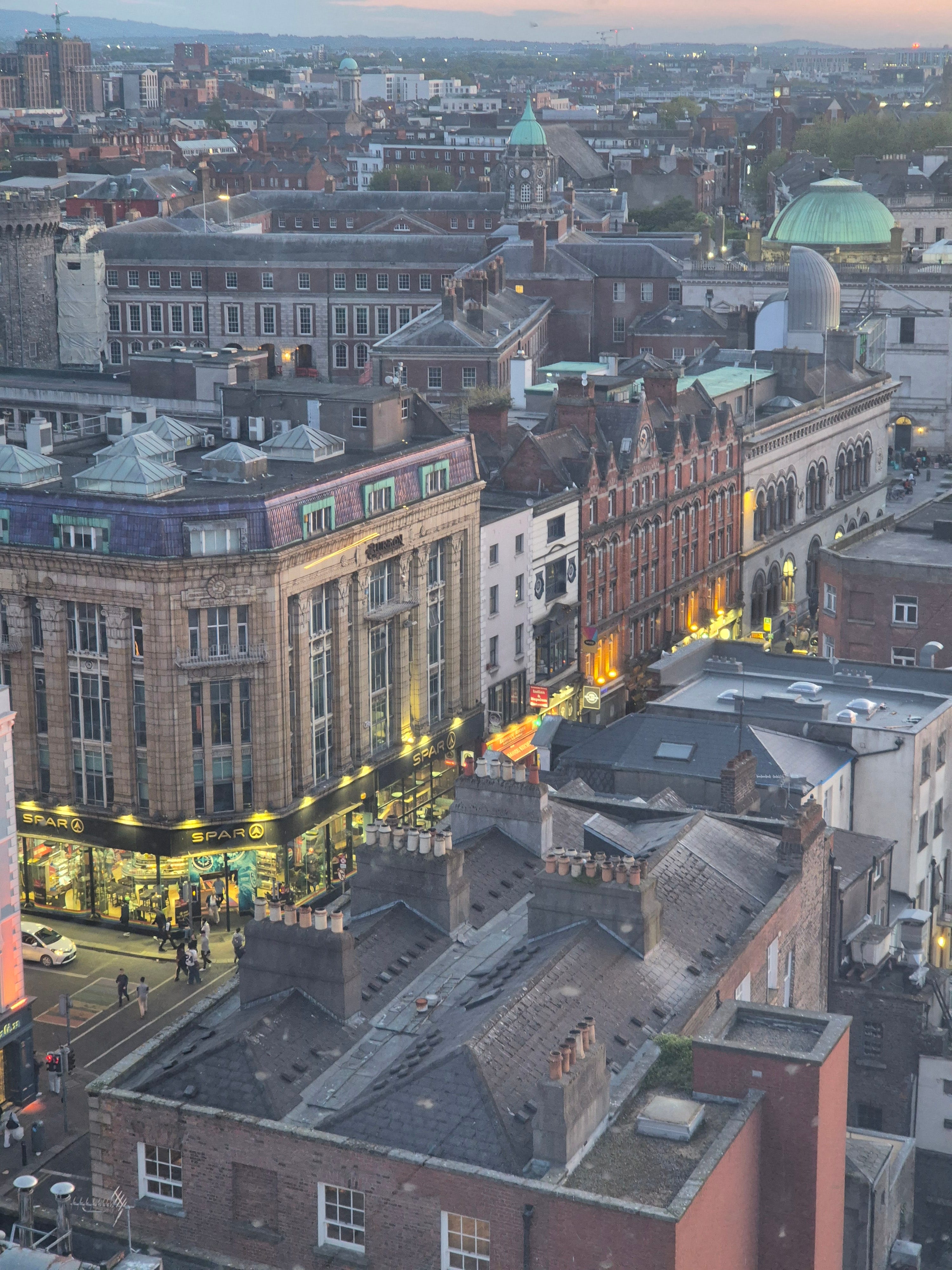
Then there are the unseen constraints: old street names pronounced in new ways with strange accents, the discontinuous neighbourhoods, stranded small villages with blurry boundaries; the variegated sights, sounds, smells, the changing ground under foot. There is that peculiar character of a city awakening in the early morning; noise building here and there, people appearing, bikes and cars suddenly rushing past, the rumble of the trains and buses.
This quality, is so difficult to describe, is one so very different to the small towns and villages and other places you encounter, or perhaps have lived in, or perhaps even live in, but it’s there, exciting, frightening, innervating, ennervating, alive.
All roads lead to the city. All roads lead from the city. It is concrete, glass, steel, unyielding. Then a park, a green square, trees, bushes, seats, a different pace.
I love it.
I’m thinking here of Dublin, London, Paris, New York, Rome, Bangalore, Singapore, but not Florence, Venice, Galway, Cork, Manchester, Oxford.


There’s something different, almost intangible, about metropolitan city life, the cityscape itself, a separateness, a something feeling different in itself, and purely of itself.
A town, even a beautiful or historic one, feels bounded, hemmed in in some way: you can imagine its edges; you can see yourself walking out of it to the countryside around.
You can hold its whole image in your head.
A metropolis exceeds you: your grasp, your vision, your intuition.
A metropolis cannot be grasped, apprehended, visualised, all at once, for it has no single face: it contains villages, empires, ruins, commuters, tourists, office workers, ghosts, money, poverty, performance, exhaustion, architecture, bureaucracy, memory, anonymity, connections. A metropolitan city is not merely a place where people live, for the metropolis is a machine for producing encounters, ambition, escape, concealment, reinvention, renewal, change.
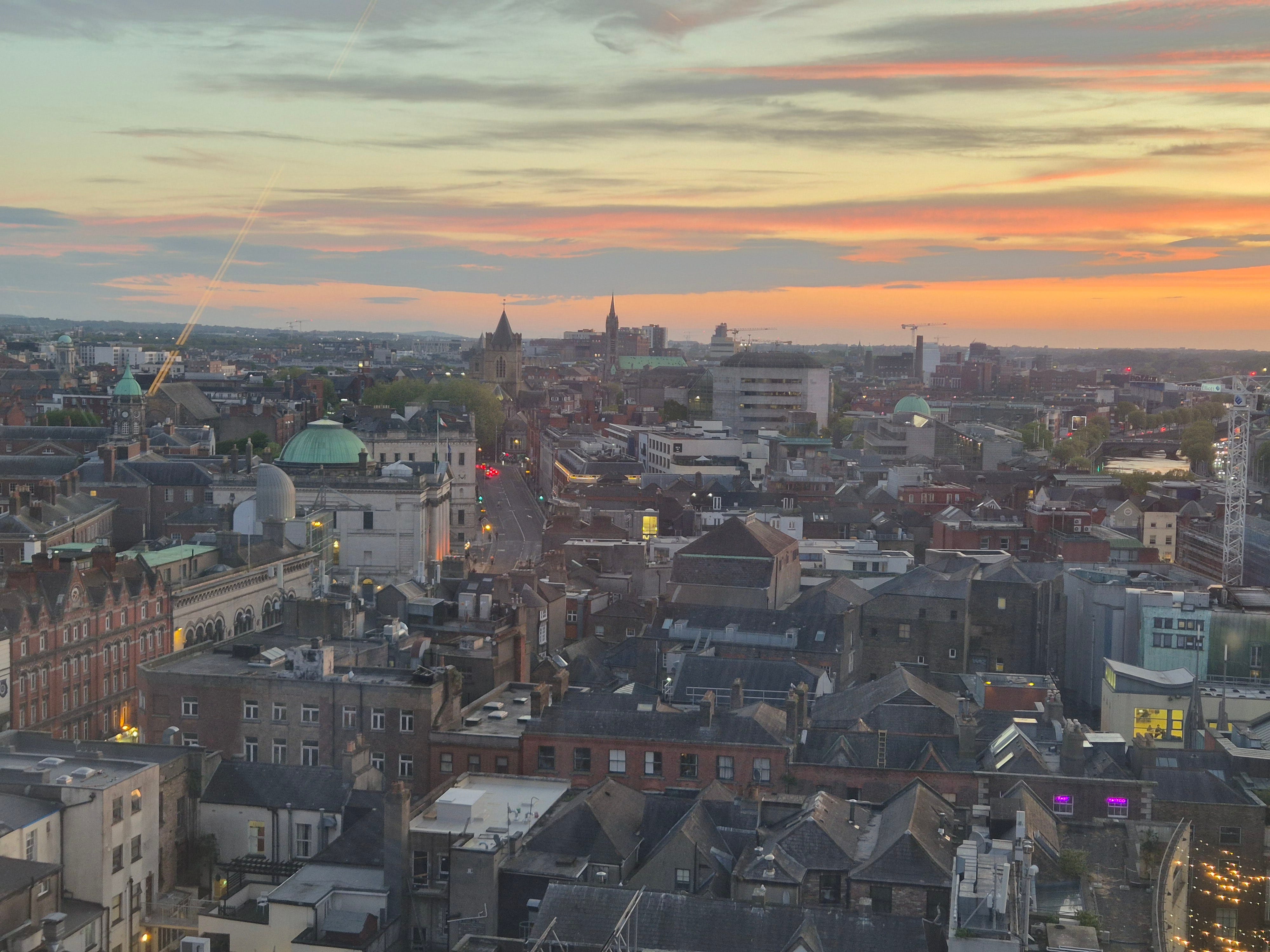
That may be the most intangible thing: a sense the city itself almost has an independent psychological existence, not just a backdrop for human life, but a defining, liminal, subtle presence with peculiar affordances all its own.
In such a city, the urbanity almost seems conscious: the confluences of people, the crowding and emptying railway platforms, the near collisions of speeding pedestrians at street corners, the squares where we sit and watch the world go by, the office blocks where we imagine we command the world as it goes by, the noisy parks at lunchtime, the cafés, the rivers and canals crossed by people who do not look up, for their phones have captured them:- all of this has a character, a qaulity, a way of being, independent of any one life passing through it.
The metropolitan city is an atmosphere, a hive mind encapsulating the individual mind, absorbing you, capturing you, rendering you small even as the stage you are on gets bigger.
It’s a place that watches no one, yet seems to accomodate everyone.
The distinction between the ‘beautiful city’ and the ‘metropolitan city with psychic mass’ feels central - perhaps the key point.
Florence and Venice are extraordinary, astounding, jawdropping, but they are too available to the eye: they are aesthetic objects, too easily reduceable to tourist porn in the way that New York or London cannot be. Rome and Paris are beautiful, but they are not reducible to their beauty alone: there is so much more going on in them.
Dublin now has this character too, albeit not imperial in scale, never having had the plundered treasures of empire to conjure itself into being with, but it has a peculiar something: a new busyness, crowdedness, literature, rain, Georgian order, institutional memory, pub life, sea edge, commuters, red brick buildings, old tenaments now repurposed, the ghosts, new buildings, new and old neighbourhoods, its raggedy unfinishedness.
Dublin has an all new tempo now - a speed, crowdedness, and urgency it lacked thirty years ago. It has become somewhere. Not just a city people left from, or returned to, or remembered sentimentally from abroad, but a place people come to. A place of arrival. A place of ambition, friction, anonymity, and pressure.
This is not simple progress, and not simple loss, for something else has been gained: scale, confidence, worldliness, the electricity of elsewhere arriving here. Something has been lost too: ease, cheapness, slack, the accidental rooms in which certain kinds of life can unfold. But psychologically the change is unmistakable. Dublin no longer feels like a city waiting to become itself. It feels like a city under pressure from having become itself.
The state is here, the universities are here, the tourists are here, the tech firms are here, the lawyers, writers, migrants, returning emigrants, students, consultants, civil servants, shoppers, drinkers, and commuters all pressed into the same narrow streets.
The result is not grandeur exactly. Dublin is not grand in the manner of Paris, nor vast in the manner of London, nor mythically vertical like New York. Its difference lies in compression. It is a city whose old scale has been forced to contain a new global role. That produces the tempo: the crowded platforms, the costly rooms, the cranes, the hotel lobbies, the hurried cafés, the little Georgian streets often carrying too much traffic.
Dublin could feel smaller than itself: a capital city with a provincial tempo, a place of great buildings and narrow prospects, of literary memory and economic constraint, of wit, talk, exile, and return: a place of ‘silence exile and cunning’. Its history was long and large, but its present, and presence, was underpowered.
That has changed. Dublin has become, or is becoming again, a place that matters. Not simply larger, not simply richer, but more consequential.
I do not think those of us who live in Dublin have quite metabolised this change. We still talk about the city as if it were the Dublin of thirty years ago: intimate, familiar, a little shabby, a little underpowered, a place whose charm lay partly in its limits.
But the city has changed category: much more crowded, more expensive, more international, more urgent, more economically consequential. It has regained gravity, but much of our public language still treats it as a large town with capital-city functions.
Nor do I think our politicians have recognised this fully. They govern Dublin as though its pressures were temporary inconveniences rather than signs of a changed urban condition. All under straing and in demand: housing, transport, public spaces, policing, planning, tourism, culture, night life, universities, migration, work: these are are the symptoms of a city that has become somewhere again.
The political task is not merely to fix Dublin’s deficits, important as that is. It is to understand what Dublin now is. A city that matters needs institutions capable of dealing with it, managing it, envisioning it.
And yet we behave as if this were normal, as if Dublin were always bound to become this: crowded, connected, expensive, multilingual, airport-facing, economically consequential. But it need not have happened. Dublin could have remained what it was for much of living memory: dowdy, charming, down-at-heel, clever, intimate, rain-darkened, a city of talk, literature, underused buildings, familiar faces, modest expectations and emigration.
Dublin could have remained a capital that felt smaller than itself, but instead it has become, or is becoming again, a place that matters - not rhetorically, not in nostalgia, but in the hard senses of work, money, migration, travel routes, pressure and consequence. The strange thing is not only that Dublin has changed; the strange thing is how little we have allowed ourselves to be astonished by this change.
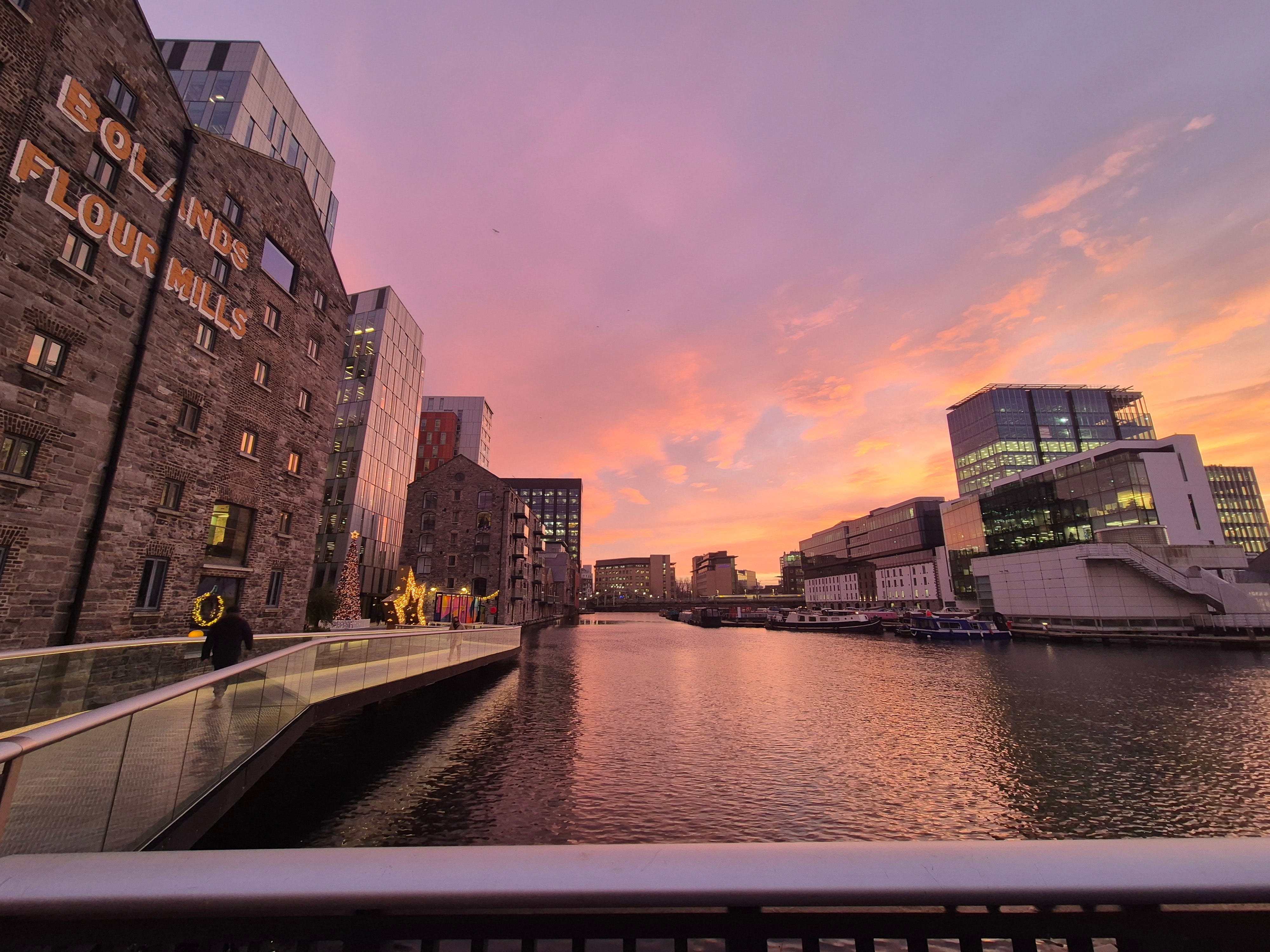
However, to borrow from Robbie Burns: to see ourselves as others see us, Dublin looks less like a charming, rain-streaked literary capital than like a high-performing, high-cost, globally connected services city that has not fully built out the housing, transport or civic capacity required by its own success.
We have a sometimes-provincial political class managing a post-provincial economy; Dublin has not become a lesser version of a larger city: Dublin has become the larger version of itself that is was never fated to become, but somehow did and this happened before it has become domestically understood. Dublin has changed category: it’s not that Dublin has become or tries to outcompete London or some other metropolis - it is self-confidently its own place now, and can’t be bothered with self-aggrandising or hubristic comparisons anymore.
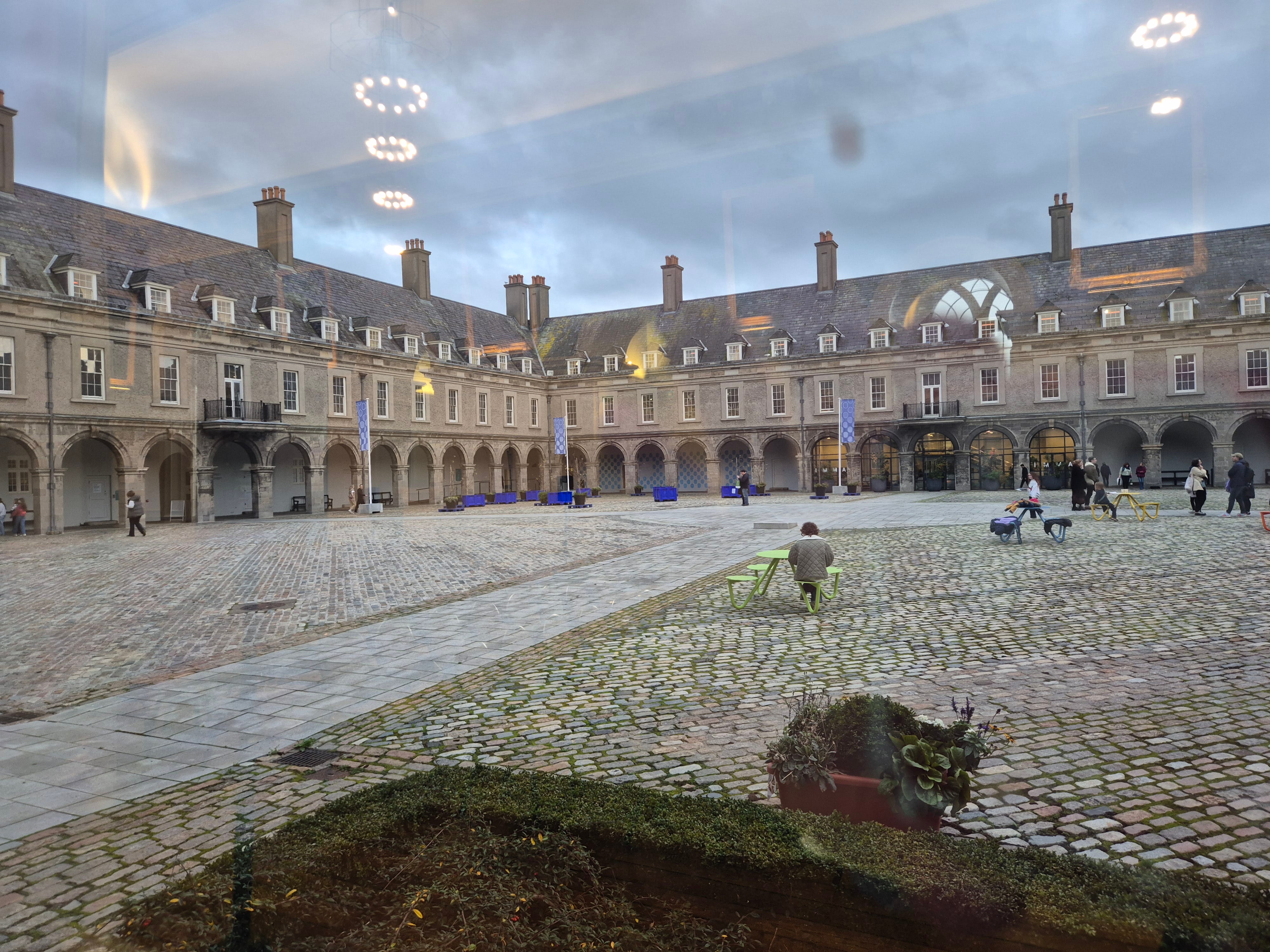
To my non-Dublin readers: you should come visit, stay, live here.
Urban Walking (Galway, Dublin, London, Paris, New York, Miami Beach, Lucknow)
The myth of the magical city: Why I hated Paris, why I was wrong, and what New York taught me
College Green, After the Bell
“O tell me all about Anna Livia!” (Joyce, Finnegan’s Wake)
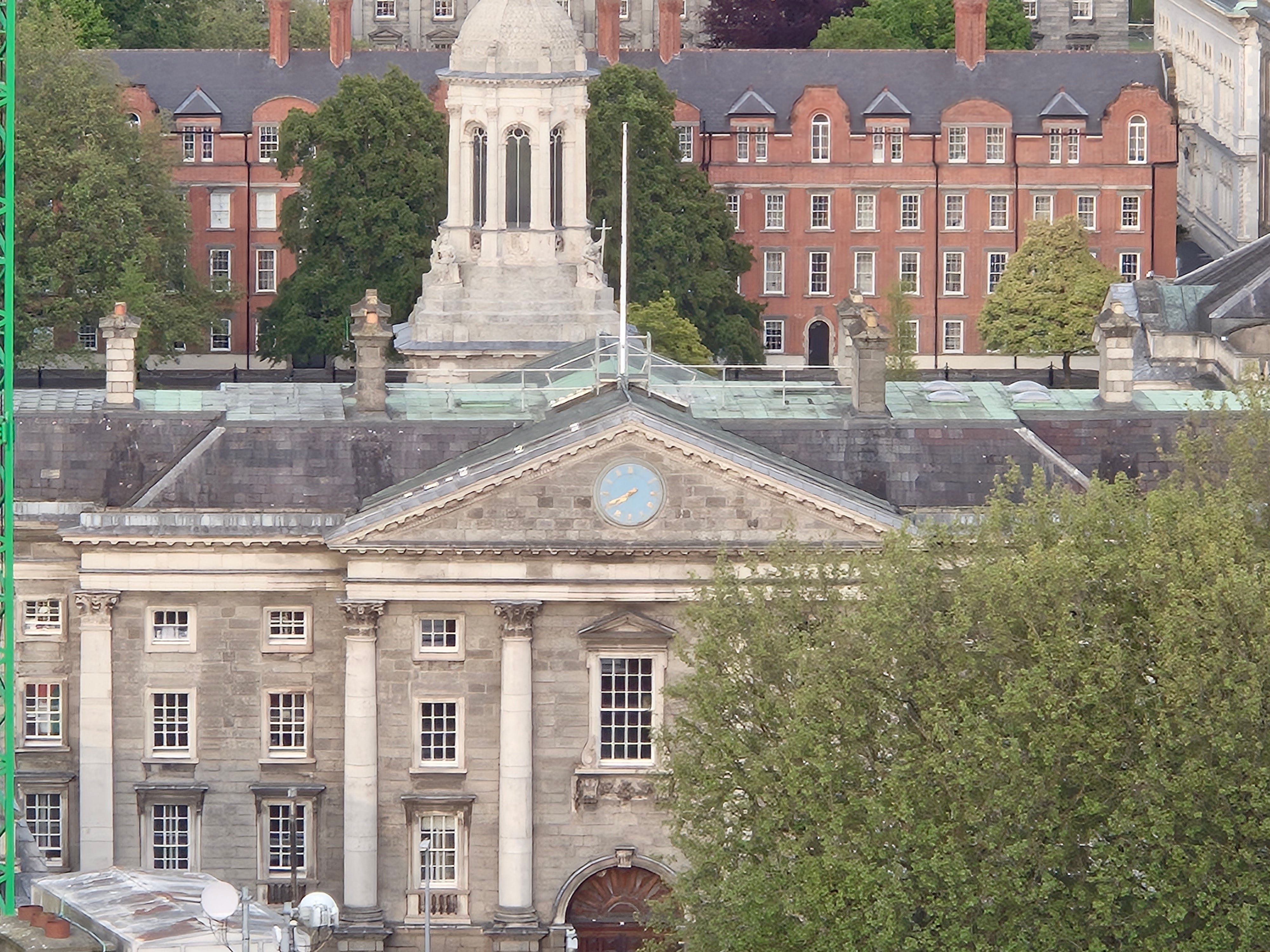
Step out of Trinity through Front Gate into the rarefied air of College Green; behind you are lecture rooms, exam halls, labs, libraries, tourists photographing the Campanile, students cutting diagonally across Front Square (because students walk whatever way they want). Ahead is Dame Street - what should the grandest of vistas: instead a melange of buses, taxis, cyclists, delivery riders, office workers, visitors looking the wrong way before crossing, the old Bank of Ireland building curved and self-important where the old Irish Parliament once sat. Edmund Burke is standing on his plinth facing the onslaught, willing to take on all-comers, waiting to demolish a poor argument, a bad idea.
(below the line - a Dublin psychogeographical tour, and lots of music; and D4 guy; how to speak Dublish; and the culchies among us; and an outsider’s take)
